Skip to content

Donders Wonders

Over hersenen en wetenschap – On Brains and Science

  • Home
  • Topics
    • Behaviour
    • Cognition
    • Education
    • Emotion
    • Food
    • Happiness
    • Human Body
    • Language
    • Mental Health
    • Neuromyths
    • Science
    • Self-Improvement
    • Social life
    • Sport
    • Stress
    • Tech
  • About Us
    • Donders Institute
    • Team
    • Contact
    • Links
  • Dutch
  • English
DW
Did I really see that?  Did I really see that?  More than sensitive: the brain of highly sensitive people is tuned differently More than sensitive: the brain of highly sensitive people is tuned differently Collective and diverse intelligence: something beyond cognitive science Collective and diverse intelligence: something beyond cognitive science
Research

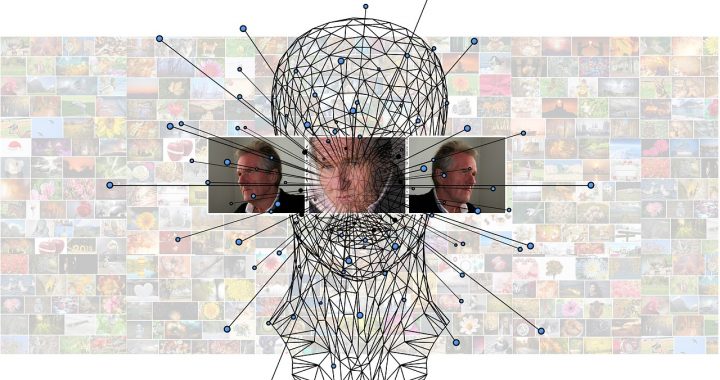
Did I really see that? 

By Vivek Sharma / 21 April 2026
Research

More than sensitive: the brain of highly sensitive people is tuned differently

By Guest Blogger / 13 April 2026
Photo by National Cancer Institute on Unsplash
Research

Collective and diverse intelligence: something beyond cognitive science

By Siddharth Chaturvedi / 6 April 2026
of
Highlighted Research

Connected but conflicted: What social media really means for teen mental health

By Vivek Sharma / 5 May 2025
Do you speak body motion ?
Research

Do you speak body motion ?

By Kim Beneyton / 17 October 2022

In Canada, dancers and researchers collaborated to develop dance as the universal body language for interacting with people suffering from dementia.

Nostalgia, the lighthouse of memory
Research

Nostalgia, the lighthouse of memory

By Christienne Damatac / 10 October 2022

Nostalgia is a deliberate and bittersweet emotion that connects us to ourselves and other people. It reminds us of the sweeter moments of our lives and the irreversibility of time.

Hypno..what??
Research

Hypno..what??

By Martina Arenella / 29 September 2022

I bet you have heard of hypnosis. Do you really know though how it affects our brain and our behavior?

Mindfulness is less helpful for combating stress in young people
Research

Mindfulness is less helpful for combating stress in young people

By Julija Vaitonyte / 19 September 2022

For thousands of children and teenagers, September marks the return to school, and with it the associated stress. Can stress be countered with mindfulness training in youth? The findings of a large-scale project suggest that it cannot be, really.

What high sensitivity feels like for adults
Research

What high sensitivity feels like for adults

By Guest Blogger / 12 September 2022

Everyone is sensitive to environmental stimuli, but the degree to which we are sensitive differs between individuals. This infographic describes the latest scientific insight on what high sensitivity feels like for adults.

Mathematical Secrets of Nature’s Beauty?
Fact Check/Research

Mathematical Secrets of Nature’s Beauty?

By Francesca Abela / 5 September 2022

Alan Turing was an excellent mathematician and codebreaker. Less is known about his great contribution to the field of biology: he spent the last years of his life developing mathematical theories to describe the patterns we see in nature

What is PET-scan and what does it measure?
Fact Check/Research

What is PET-scan and what does it measure?

By Ping Chen / 29 August 2022

Just like a firefly glows when it inhales oxygen, our brains can light up when functioning with the help of PET scans.

Making brains work with the 3 T’s of brain stimulation: TMS, TES, and TUS
Research

Making brains work with the 3 T’s of brain stimulation: TMS, TES, and TUS

By Brittany / 22 August 2022

At the Donders Institute, we use several methods to induce or disturb brain activity and investigate its consequences.

Using MRI to study brain anatomy, communication and chemistry
Research

Using MRI to study brain anatomy, communication and chemistry

By Viola Hollestein / 15 August 2022

MRI can give us a detailed picture of brain anatomy, a map of communication pathways, and even a measure of different chemicals in the brain. Read on to find out how.

Measuring brain activity with EEG or MEG: Millions of tiny batteries in your brain?
Research

Measuring brain activity with EEG or MEG: Millions of tiny batteries in your brain?

By Floortje Bouwkamp / 8 August 2022

At the Donders Institute, we use EEG or MEG to measure brain activity. These tools use special equipment to detect the electric current or magnetic field that brain cells generate.

Posts navigation

Older posts
Newer posts

Topics

Science (310) Health (166) Social life (104) Human Body (94) Self-Improvement (89) Language (64) Behaviour (63) Education (60) Happiness (54) Tech (35) Stress (27) Food (21) Cognitie (17) Neuromyths (17) Emotion (17) brain (8) positive psychology (7) Sport (7) Cognition (5) Behavior (5) communication (4) Mindfulness (3) psychology (3)

Meta

  • Log in
  • Entries feed
  • Comments feed
  • WordPress.org

Categories

  • Brain basics (12)
  • Events (11)
  • Fact Check (37)
  • Future of Brain Science (5)
  • Highlighted (2)
  • Interview (3)
  • Life's Big Questions (3)
  • Opinion (73)
  • Research (492)
  • Summer series (3)
  • technology (3)

Donders Wonders

Over hersenen en wetenschap – On Brains and Science

  • Donders Wonders
  • Donders Institute
  • Radboud University
  • Radboudumc
  • Privacy & Cookies
Copyright © All rights reserved. | Theme: Elegant Magazine by AF themes.