
This post is also available in .
Seeing that one car
It might sound simple, but it isn’t. In fact, this question has puzzled researchers in neuroscience, and even philosophers, for decades. And to this day, there is no clear answer to this question called the “binding problem”.
So, what do we know? The world around us feels simple. We effortlessly see objects – cars, people, trees – as whole things. But to recognize an object, your brain has to process many different features: shape, colour, movement, location, even sound and smell.
But there is a catch. These different features are not processed together. They are handled by different parts of the brain, even though they come in through the same sense. For example, colour and motion are both perceived by the eye, but are processed in different brain areas. These areas rely on different groups of neurons, all firing in their own patterns.
And yet, you don’t experience separate pieces. You don’t see colour, shape, and sound as disconnected signals. You see one object. One car.
This raises a difficult question: how does the brain combine all these separate signals into one coherent whole? It is a fair question, because there is no single, definite answer. The lack of a clear explanation is what researchers call the binding problem.
The brain as a cinema
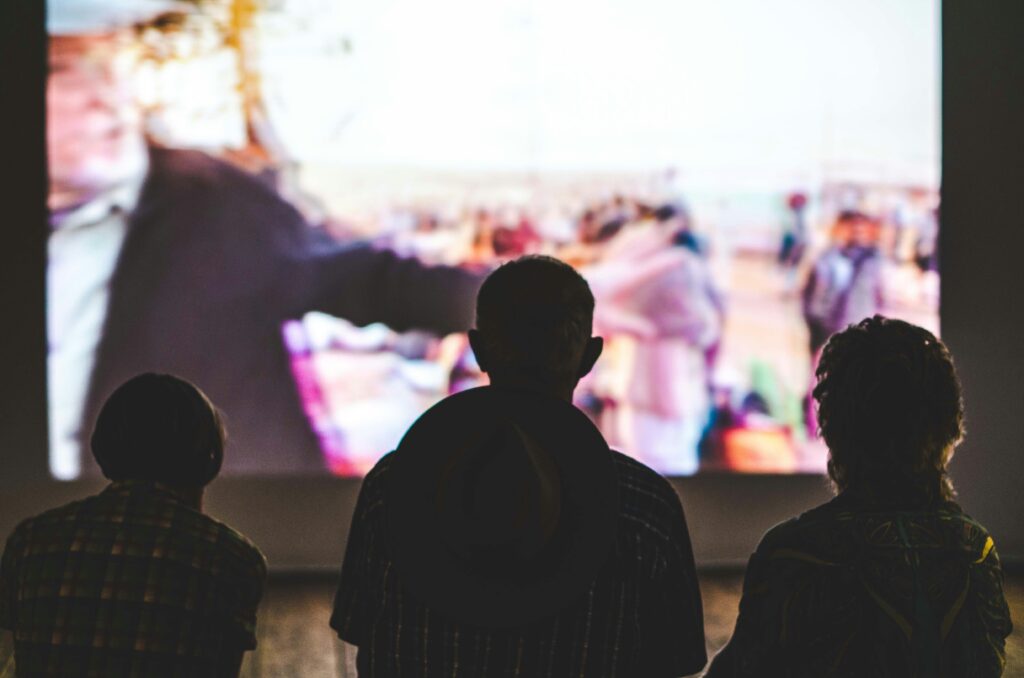
To better understand this, imagine your brain as a cinema. In the projection room, the movie is split into parts. One system handles the image, another plays the sound, and a third adds subtitles. Each system works separately, yet together they create one smooth film.
Something similar happens in your brain. Information from your senses is processed in separate streams but somehow it is brought together again. This process is called binding. It allows you to experience a unified object instead of a collection of loose features.
Two leading ideas about binding
Researchers have proposed several explanations for how the brain combines separate signals into one object. Two well-known ideas focus on how neurons work together.
The first is binding by synchrony. This idea suggests that neurons that represent features of the same object fire at the same time. Here, timing acts as the “glue”: if neurons fire together, their signals are linked. You can think of it like an orchestra: each musician plays a different instrument, but when they all follow the same rhythm, the result is a single, coherent piece of music rather than isolated sounds.
The second is binding by reentrant processing. In this case, brain areas send signals back and forth to each other. This ongoing communication helps connect features that belong together. Here, the “glue” is the ongoing interaction between brain regions, which is closely linked to attention and focus. You can see it as a group of friends recalling their past vacation in Greece. One person starts. Others add details, correct each other, and slowly the full, shared story emerges through back-and-forth communication.
Both ideas show that there is no single place in the brain where everything comes together. Binding depends on many areas working together. These are important ideas, but they are not the only ones.
Still unfinished
And yet, none of these explanations fully captures how the brain achieves this seamless experience. The “film” we experience every moment still raises a deeper question: who, or what, is doing the editing behind the scenes?
For now, the brain continuous to turn fragments into a film we never notice is assembled at all. And the mystery of how it does so remains very much open.
Credits
Author: Rick Arends
Buddy: Dirk-Jan Melssen
Translator: Rick Arends
About The Author
