This post is also available in .
It is perhaps the oldest question that people ask themselves. Although no one can return to tell us, neuroscience does offer clues to understanding what happens in the final moments of life.
Because we cannot investigate death itself, scientists look at near-death experiences (NDEs). In the 1980s, psychiatrist Bruce Greyson developed a scale to describe these experiences. People remarkably often report the same elements: a tunnel of light, a review of their life, and an intense feeling of peace and love.
From a neuroscientific perspective, these experiences can be partly explained. When the heart stops, the brain no longer receives oxygen. Within seconds, a person loses consciousness. The brain switches to a kind of energy-saving mode. Only after a few minutes does a process called “spreading depolarization” occur: a wave of discharge that slowly spreads through the brain. This process is still reversible, but only if resuscitation takes place quickly enough.
During this phase, DMT, a substance produced naturally by the body with psychedelic effects, may also be released. Research shows that DMT is released during oxygen deprivation in the brain and can evoke NDE-like experiences. In one study, subjects reported almost all the characteristics of a classic near-death experience after being administered DMT.
The well-known tunnel vision can also be explained by the structure of our visual system. Due to a lack of oxygen, the peripheral parts of the retina fail first, while the center remains active. The result: a bright spot in the middle, surrounded by darkness. We see this same mechanism in fighter pilots just before they lose consciousness.
Transcending fear of death through art?
In addition to these biological processes, imagination also plays an important role in how we experience death. In recent research by Enny Das and colleagues, they investigated how people can transcend their fear of death through films. The researchers found that empathy is crucial: only when viewers can connect emotionally with characters who die does their fear of death diminish. So it is not simply exposure to death, but the ability to empathize with another person that helps to alleviate existential anxiety.
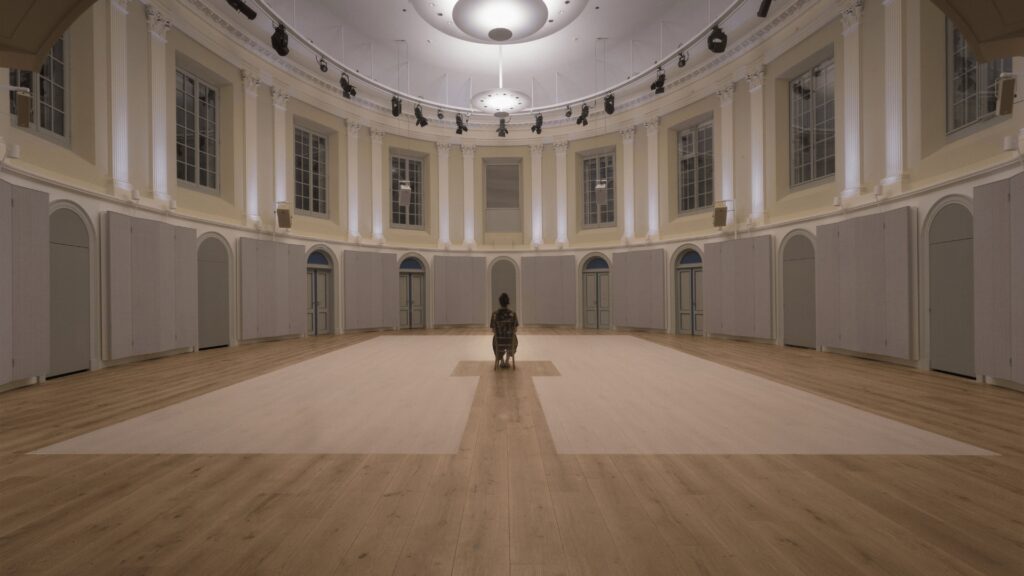
This same combination of imagination and physical experience was central to an artwork by artists Bakels and Mascini, in which participants ‘experience’ their own death by meditating on the decomposition of their bodies in nine stages, inspired by the Buddhist ritual The Nine Cemetery Contemplations. The work shows that consciously exploring mortality—like film and ritual—can not only evoke fear, but also lead to a greater appreciation of life.
Neuroscience cannot fully explain death. But it does show that dying is not an abrupt end, and that the brain—and our imagination—may help us to make that transition gentler. Another comforting fact is that 90% of near-death experiences are perceived as positive.
Credits:
- Auteur: Charlotte Sachs
- Afbeelding: Ilya Rabinovich
About The Author
